

A Daughter’s Quiet Reckoning
Washington Red - Anonymous

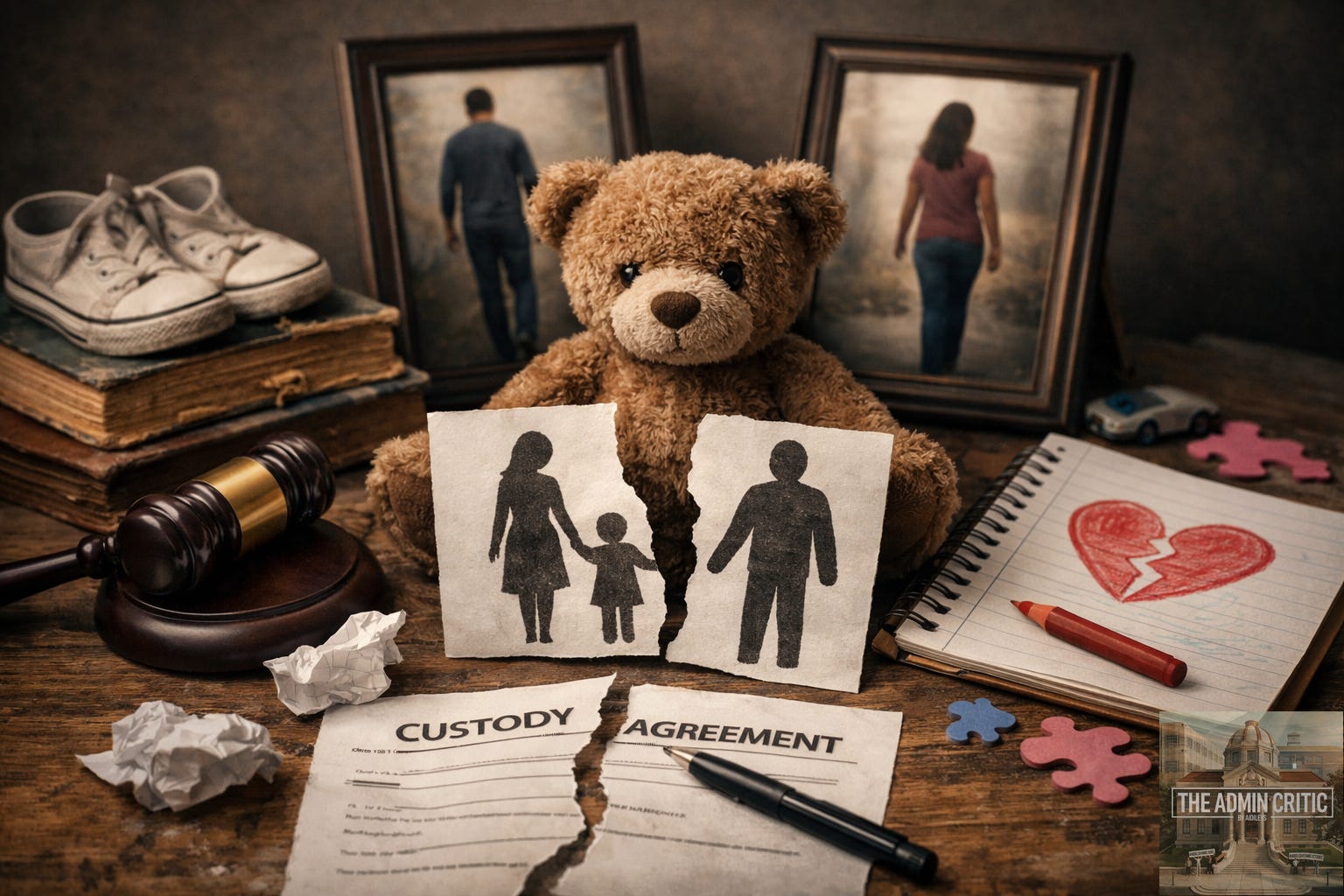
“At 23 years old, I reflect on my experience growing up as a child of divorce in Washington state. My parents separated in 2008 and finalized their divorce in 2009, when I was seven years old. For about a year during the separation, we all still lived in the same house, but my mom had her own bedroom. Even before the divorce was finalized, she was my primary caregiver. My dad struggled with both physical and mental health challenges, and while he had once been more involved in my life when I was very young, we were not particularly close by the time my parents separated.
After the courts became involved, I remember being interviewed along with my younger brother. People came to our home and asked questions about our parents as part of the custody evaluation process. Ultimately, my mother was granted primary custody. I lived with her full-time, except for Thursday evenings for a few hours and every other weekend with my dad.
At the time, the divorce didn’t feel especially abnormal. Many of my friends had divorced parents, and going between two homes felt common. As a child, I didn’t fully process the gravity of what was happening. Looking back, though, I recognize the emotional weight that surrounded the situation—especially the fear and tension that followed the legal proceedings.
One of the most lasting impacts wasn’t the custody schedule itself, but the atmosphere of anxiety that developed afterward. My mother became extremely fearful of Child Protective Services being involved. If I had a bruise or minor injury, she would panic. I remember once getting a black eye from falling into a trash can, and she kept me home from school out of fear that someone would assume abuse. That constant anxiety shaped my childhood in subtle but powerful ways.
I also internalized a strong sense of responsibility for my younger brother. He took the divorce harder than I did, and I felt protective of him. I even developed misconceptions about my father’s ability to afford food, and I tried to limit how much I ate at his house so there would be more for my brother—despite there being no real financial crisis. That instinct to shield him says a lot about how children often take on emotional burdens quietly.
As I’ve grown older, I’ve realized how much my understanding of my father was shaped by my mother’s perspective. She was open about her frustrations and fears, and while I don’t believe she intended harm, it influenced how I saw him. My stepfather also made comments that reinforced negative narratives. As a child, I didn’t have the ability to view those statements objectively. I absorbed them.
When I consider whether the courts acted in my best interest, I believe the final custody arrangement likely made sense given my father’s health at the time. However, I also recognize that I was exposed primarily to one parent’s version of events. There were adult conversations, family interviews, and accusations that I wasn’t part of. I’ve even considered trying to access the court records as an adult to better understand what actually happened.
If there’s one change I would advocate for in these situations, it’s more education and support for parents on how to navigate divorce with their children. Specifically, guidance on how to speak about the other parent in a way that doesn’t damage the child’s relationship with them. Children are highly impressionable and often unable to separate fact from emotion. Even subtle negativity can shape their perceptions for years.
Overall, my experience wasn’t defined by dramatic court battles, but by the emotional environment that surrounded the process—fear, loyalty conflicts, protectiveness, and confusion. As an adult, I see the complexity more clearly. As a child, I simply adapted to what felt normal.
This reflection is not about assigning blame, but about acknowledging how deeply children are affected—not just by custody decisions, but by the narratives and emotions that surround them.”
The fact it's anonymous speaks volumes. It's always going to be the mothers fault.